Node Weekly Issue 624: May 14, 2026
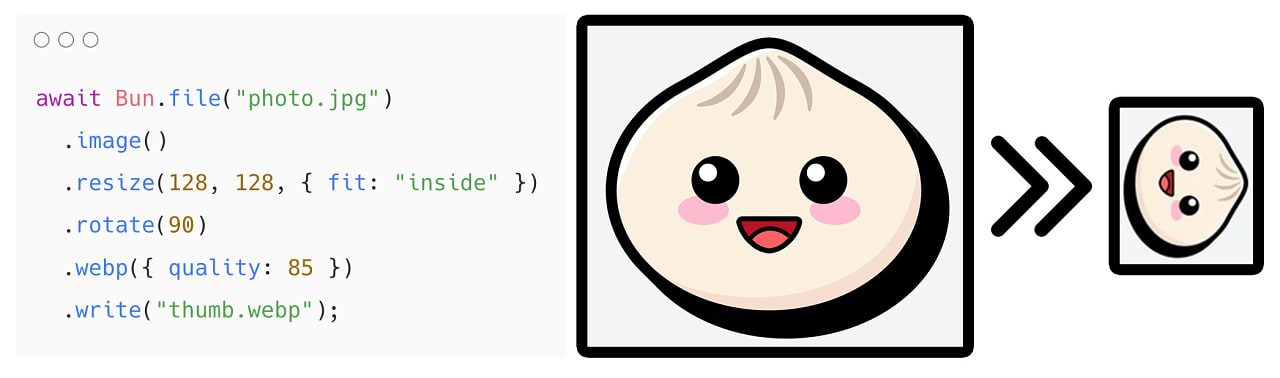
Bun.Image is a new built-in image processing API which can replace Sharp in many cases. Bun’s package manager has added a global virtual store (akin to pnpm’s), Bun.serve has experimental HTTP/3 over QUIC support, and fetch gets HTTP/2 and HTTP/3 support. Plus the usual raft of Node.js compatibility improvements.
Bun vs Node.js: 3x Faster, But Is It Ready? [2026]
Bun is designed as a drop-in replacement for Node.js, reaching approximately 98% API compatibility as of early 2026. It is highly compatible with the existing Node.js ecosystem, allowing most projects to run without any code modifications. [1, 2, 3, 4]
Core Compatibility Features
- Built-in Modules: Bun implements nearly all standard Node.js modules, including
fs,path,http,buffer, andevents. Over 90% of Node.js's own test suite passes in Bun. - npm Ecosystem: It works seamlessly with the npm registry and supports
package.jsonandnode_modules. Popular frameworks like Express, Next.js, and Fastify are fully supported. - Module Systems: Bun supports both CommonJS (CJS) and ES Modules (ESM) simultaneously, even within the same file—a feat Node.js traditionally handles with more strict separation.
- TypeScript & JSX: Unlike Node.js, which requires transpilers like
tscortsx, Bun runs.tsand.tsxfiles natively. [1, 2, 3, 4, 5, 6, 7]
Key Differences and "Rough Edges"
- Underlying Engine: Bun uses Apple's JavaScriptCore (used in Safari), whereas Node.js uses Google's V8 engine (used in Chrome).
- Native Add-ons: Some lower-level C++ Node.js addons or highly complex native modules may still face issues, though Bun's Foreign Function Interface (FFI) aims to bridge this gap.
- Tooling Integration: While Bun includes its own test runner and bundler, it may not yet integrate as deeply with certain IDE features (like the VS Code Test Explorer) as established tools like Jest. [1, 2, 3, 4, 5]

No comments:
Post a Comment