Wednesday, April 22, 2026

AI deal: SpaceX += Cursor - $60B? Brave new world...

circular AI deals are getting out of control, and risky investments are getting more risky...

SpaceX is becoming "AI company" to save xAI grand investments in data centers and GPUs,
xAI is "bailing out" X (twitter) to get access to data,
and now Cursor, effectively a fine-tuned (free) VS Code + AI Agents is added to the pool 
for $60B evaluation... 
And Cursor is preferred tool for Nvidia, too, that benefits the most from data centers sales... 

Yes, they are all excellent tech companies and people, but as investments that is very, very risky.

And most of stock market now is based on foundations like this... 
"Brave new world..."

"what can go wrong?" or "what can go right?"

SpaceX is working with Cursor and has an option to buy the startup for $60B | TechCrunch

SpaceX said it has struck a deal with Cursor to develop a next-generation “coding and knowledge work AI,” which includes a surprising provision — an option to buy the popular software development platform for $60 billion later this year.

Partnering with and potentially purchasing a leader in the hottest AI product category can only be seen in the context of SpaceX’s much-anticipated public offering. Investors seeking more value in the IPO might see its engagement with Cursor as another way to extract value from Elon Musk’s increasingly sprawling tech conglomerate.

AI Ads in Chatbots, Apple CEO Transition, & NSA-DoD Rift

Elon Musk's space and AI empire is making a major play in the coding AI market. SpaceX announced a partnership with Cursor to build a next-generation AI for coding and knowledge work, with an option to either pay the startup $10 billion for the work or acquire it outright for $60 billion later this year. The deal pairs Cursor's developer distribution with SpaceX's Colossus supercomputer — claimed to match the compute of a million Nvidia H100s — and follows xAI recently renting compute to Cursor and hiring away two of its senior engineering leaders.


"Brave new world"
refers to newly created situation, technology, or system, often implying a futuristic, highly advanced, yet unsettling or dystopian society, popularized by Aldous Huxley’s 1932 novel. It describes a reality drastically changed by technological advancements, genetic engineering, and state control, which can be seen as both promising and intimidating.

AI Literate Programming => Markdown?!

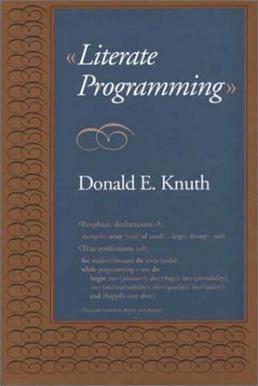
Literate Programming was a good and influential idea, to include "intent" for code as text
and then manage code and text together;

but didn't really get much attention, difficult tooling and management

Now when much of new code development is being quickly automated with AI Agents,
markdown is becoming a primary "source artifact", and much of code is "downstream" from it.

Trouble is that md and code files are often not connected, and even related/referenced.

And that can be changed with big benefit.

If we start using markdown for code comments, 
and adjust tools to support it (should be "easy" change),
we could actually achieve key objectives of...

Literate programming - Wikipedia

Literate programming (LP) is a programming paradigm introduced in 1984 by Donald Knuth in which a computer program is given as an explanation of how it works in a natural language, such as English, interspersed (embedded) with snippets of macros and traditional source code, from which compilable source code can be generated.[1] The approach is used in scientific computing and in data science routinely for reproducible research and open access purposes.[2] Literate programming tools are used by millions of programmers today.[3]

related:

https://blog.dragansr.com/2022/04/the-art-of-computer-programming-by.html

https://blog.dragansr.com/2021/09/literate-programming-notebooks.html

https://blog.dragansr.com/2020/01/literate-programming-by-donald-knuth.html

https://blog.dragansr.com/2013/08/calca-text-editor-that-loves-math.html


https://potrzebie.blogspot.com/2008/01/donald-knuth-and-google-calculator.html


AI Overview


Donald Knuth is most famous for creating the TeX typesetting system and the METAFONT font design system, but he also developed several specialized programming languages and paradigms:
  • WEB and CWEB: These are systems for Literate Programming, a methodology Knuth invented to allow programmers to write code interspersed with natural language explanations.
    • WEB was originally designed to work with Pascal.
    • CWEB is a later version designed for CC++, and Java.
  • MIX and MMIX: These are low-level instruction set architectures (ISAs) and their associated assembly languages.
    • MIX was used in early volumes of his landmark series, The Art of Computer Programming.
    • MMIX is a more modern, 64-bit RISC architecture that replaced MIX in newer editions.
  • SOL: A symbolic language for general-purpose systems simulation.
  • Literate Programming: More than a single language, this is a paradigm where the source code is treated as a work of literature, meant to be read by humans as much as executed by machines.
Knuth also has a deep history with existing languages; he was an early expert in ALGOL 60 and FORTRAN, and his early work on the TeX system was originally written in SAIL (Stanford Artificial Intelligence Language) before being converted to Pascal using his literate programming tools.