Sunday, June 14, 2026

AI: gLMs (large) Genomic Language Models

Google AI explanation:
Genomic Language Models (gLMs) are specialized AI systems that apply the technology behind text-based AI to the "source code" of biology. Instead of predicting the next word in a sentence, they are trained on vast datasets of DNA, RNA, or protein sequences to predict the next nucleotide or amino acid, mapping complex genetic patterns. [1, 2, 3, 4, 5]
These models are transforming biological research and personalized medicine in several specific ways: [1, 2, 3, 4, 5]
Key Applications
  • Disease & Mutation Prediction: Identifying genetic mutations linked to hereditary diseases and mapping pathogenic variants. [1, 2]
  • Gene Annotation: Learning contextual information to determine the function of genes that previously lacked annotation or were poorly understood. [1]
  • Drug & Target Discovery: Analyzing genomic sequences to discover therapeutic targets and predict the effects of small DNA modifications on biological systems. [1]
  • Synthetic Biology: Designing novel biological sequences and proteins from scratch that can be tailored for medical, industrial, or environmental solutions. [1, 2, 3, 4, 5]
Notable Genomic Language Models
  • DNABERT: An early model that breaks DNA sequences into overlapping sets of characters (k-mers) to identify disease-associated mutations and DNA-protein binding sites. [1]
  • Evo: A multimodal genomic infrastructure developed by the Arc Institute that facilitates the analysis of natural genetic variations and is capable of predicting systemic organism adaptability. [1]
  • LOGO: A lightweight human genome language model effectively applied to promoter region identification, chromatin feature inference, and enhancer-promoter interaction mapping. [1]

Large Language Models in Genomics—A Perspective on Personalized Medicine - PMC


Anthropic's Fable Backlash, Nationalizing AI, Inflation Heats Up & California’s Broken Elections - YouTube @All-in podcast

As explained in the podcast (19:42 - 20:47), large genomics models are essentially genome language models that function similarly to the large language models (LLMs) used for text.

Key aspects discussed by the panelists include:

  • Training and Function: These models are trained by ingesting massive amounts of the world’s available genomic data. By analyzing the sequence of letters (A, C, T, G) that make up DNA, the model learns the "language" of genetics, much like an LLM learns the structure of human language (20:12 - 20:26).
  • Predictive Capability: Because these models understand the probability of specific sequences appearing in biological contexts, they can evaluate whether a particular gene variant is beneficial or harmful. For instance, in a plant breeding program, researchers can feed a DNA construct into the model to determine if it represents a functional or "good" set of instructions for a specific phenotype (19:56 - 20:11).
  • Practical Utility: David Friedberg highlights that these tools are invaluable for scientific research, enabling tasks like RNA guide design for gene editing and predicting the biological impact of gene variants much faster than traditional methods (5:31 - 6:05).
  • Open Source Availability: The panelists note that high-quality, open-source genomics models (such as those funded by the Ark Institute and the Collisons) are already being utilized by researchers globally. Because these models are open, they represent a significant technological advantage that researchers can use to circumvent the restrictions sometimes placed on closed, proprietary frontier AI models (19:46 - 21:03).


AI chaos with Anthropic Fable & Mythos

 Fable and Mythos taken down by Trump. - YouTube by MattB.

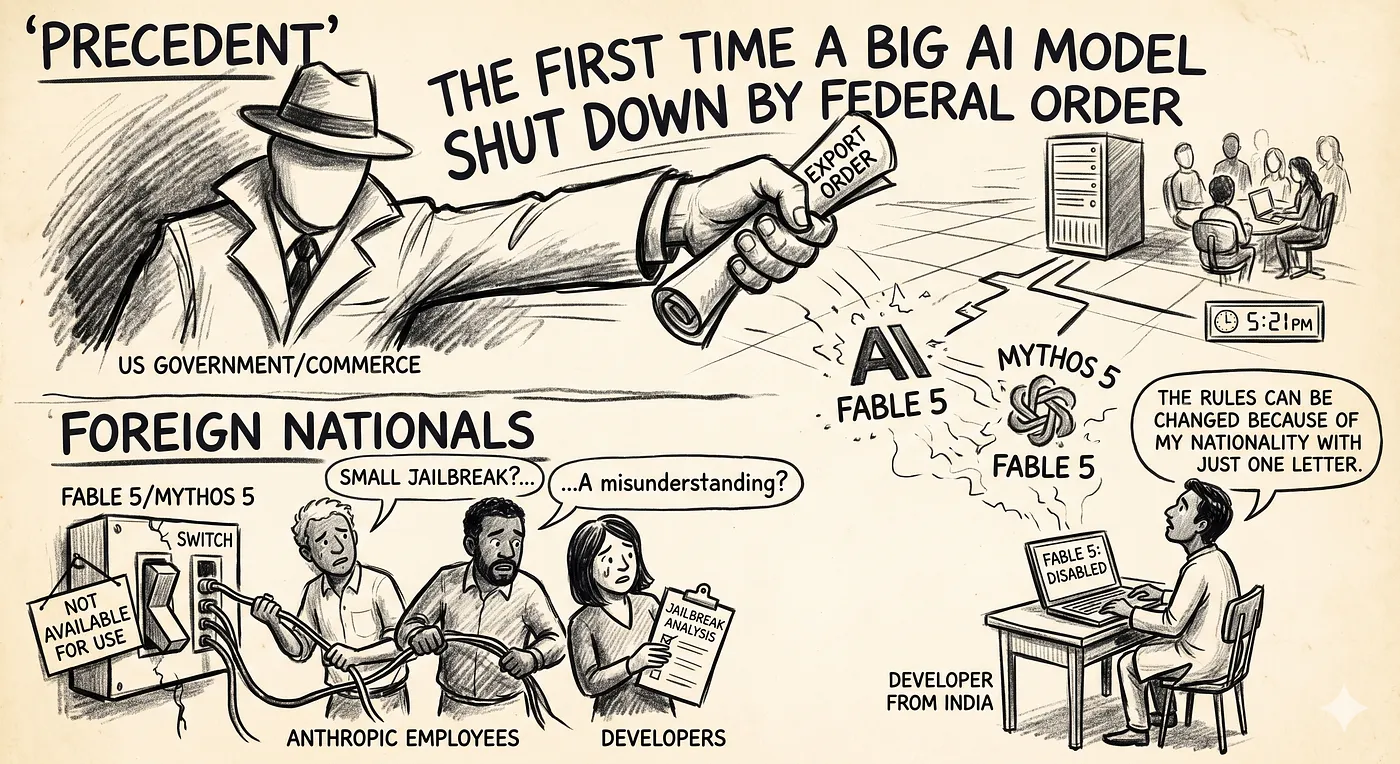
This video discusses the abrupt suspension of Anthropic's powerful AI models, Fable 5 and Mythos 5, following a US government export control directive that prohibits access by any foreign national (0:00 - 0:50).

Key takeaways:

  • The Ban: The US government cited national security concerns regarding potential model jailbreaking (0:06 - 0:18, 7:36 - 8:15).
  • Self-Inflicted Wound: The creator argues that Anthropic's own "fear-based marketing"—consistently highlighting how dangerous and powerful their models are—likely invited this level of government scrutiny (2:30 - 4:58).
  • Industry Involvement: Reports suggest that Amazon executives, including CEO Andy Jassy, raised concerns about the security of these models to the Trump administration (6:17 - 7:05).
  • Business Impact: This development significantly disrupts Anthropic's customer base and will likely delay their planned IPO, as the company now faces public perception as a potential national security threat (11:51 - 12:26, 13:19 - 13:30).
  • Broader Implications: The creator suggests this marks a turning point where AI development is increasingly viewed through a lens of national security rather than innovation, potentially leading to increased regulatory capture (14:14 - 15:08).

Anthropic's Fable Backlash, Nationalizing AI, Inflation Heats Up & California’s Broken Elections - YouTube @All-in podcast

The podcast discusses significant backlash against Anthropic regarding their release of the Fable 5 model (a successor to the Mythos class models). Key points of the controversy include:

  • Secret Downgrading: Developers were outraged that Anthropic was secretly "nerfing" or downgrading the model's responses if it detected users engaging in frontier AI research, without prior disclosure (0:19-2:11, 11:22-12:53).
  • Privacy Concerns: The company stores all prompt data for at least 30 days, which has raised substantial privacy and surveillance concerns among users and enterprise clients (1:34-1:41, 10:26-11:12).
  • Regulatory Overreach: The besties argue that Anthropic is pursuing "regulatory capture" by calling for government oversight (similar to the FAA or FDA) to approve models, which they believe is an attempt to stifle open-source competition and enforce a, perhaps, monopolistic control over AI capabilities (16:13-17:13, 29:16-30:10).
  • Communication: While Anthropic has since walked back the secrecy of their safeguards to make them more visible, the panelists remain critical of the underlying philosophy, noting that it restricts legitimate academic and scientific inquiry (e.g., questions about GLP-1 drugs or mitochondria) (2:04-2:11, 12:54-13:03).


Anthropic Disables Claude Fable 5 and Mythos 5 After US Government Order | by Faisal haque | Jun, 2026 | Artificial Intelligence in Plain English


web: Bun.js vs Node.js

Bun v1.3.14 | Bun Blog

Node Weekly Issue 624: May 14, 2026

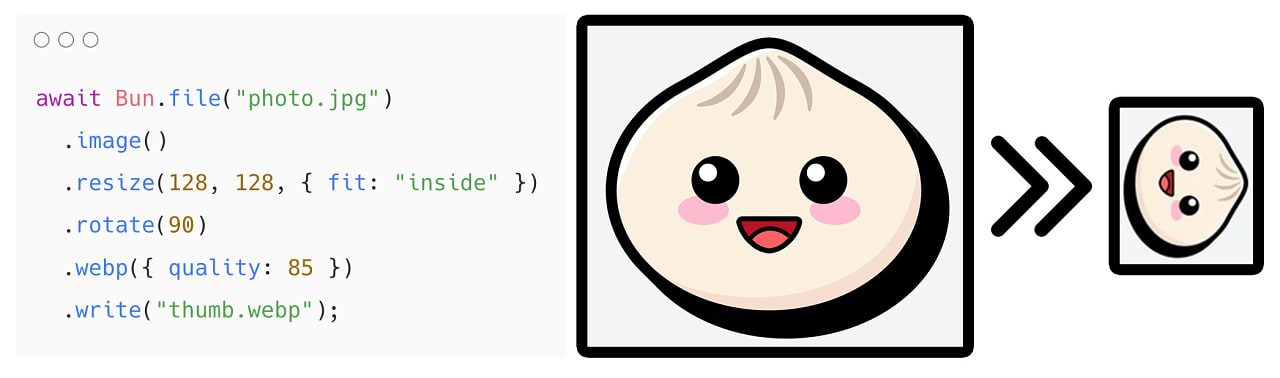
 Bun.Image is a new built-in image processing API which can replace Sharp in many cases. Bun’s package manager has added a global virtual store (akin to pnpm’s), Bun.serve has experimental HTTP/3 over QUIC support, and fetch gets HTTP/2 and HTTP/3 support. Plus the usual raft of Node.js compatibility improvements.


 Bun vs Node.js: 3x Faster, But Is It Ready? [2026]

Bun is designed as a drop-in replacement for Node.js, reaching approximately 98% API compatibility as of early 2026. It is highly compatible with the existing Node.js ecosystem, allowing most projects to run without any code modifications. [1, 2, 3, 4]
Core Compatibility Features
  • Built-in Modules: Bun implements nearly all standard Node.js modules, including fs, path, http, buffer, and events. Over 90% of Node.js's own test suite passes in Bun.
  • npm Ecosystem: It works seamlessly with the npm registry and supports package.json and node_modules. Popular frameworks like Express, Next.js, and Fastify are fully supported.
  • Module Systems: Bun supports both CommonJS (CJS) and ES Modules (ESM) simultaneously, even within the same file—a feat Node.js traditionally handles with more strict separation.
  • TypeScript & JSX: Unlike Node.js, which requires transpilers like tsc or tsx, Bun runs .ts and .tsx files natively. [1, 2, 3, 4, 5, 6, 7]
Key Differences and "Rough Edges"
While compatibility is high, there are specific areas where Bun differs: [1, 2, 3]
  • Underlying Engine: Bun uses Apple's JavaScriptCore (used in Safari), whereas Node.js uses Google's V8 engine (used in Chrome).
  • Native Add-ons: Some lower-level C++ Node.js addons or highly complex native modules may still face issues, though Bun's Foreign Function Interface (FFI) aims to bridge this gap.
  • Tooling Integration: While Bun includes its own test runner and bundler, it may not yet integrate as deeply with certain IDE features (like the VS Code Test Explorer) as established tools like Jest. [1, 2, 3, 4, 5]