Tuesday, June 02, 2026

AI: "token maxing"

Token maxxing - Wikipedia

Token Maxxing or Token Maxing is a metric used in an attempt to track productivity in the workplace especially for those using Artificial Intelligence (AI) based services. AI services charge for each token which represent units of effort expended by an AI service to solve a problem. Some believe that token consumption equates to productivity and thus can be used as a metric to monitor an employee's work


Uber's COO Says It's Getting Harder to Justify the Money Spent on AI - Business Insider

Uber’s Chief Operating Officer, Andrew Macdonald, stated that it is becoming increasingly difficult to justify the company's massive financial investments in AI.


Key Takeaways

  • Budget Overruns: Uber’s CTO, Praveen Neppalli Naga, revealed that the company had already completely drained its Claude Code budget for the entire year of 2026 by April.

  • Diminishing Returns: Macdonald noted that a massive increase in AI "token" consumption has not translated into a proportional increase in useful features for consumers.

  • Business Trade-offs: Because drawing a direct line between AI costs and tangible business value is difficult, Uber has recently slowed down hiring to offset these heavy AI investments.

  • The "Tokenmaxxing" Trend: While many tech companies are pushing employees to maximize AI use, others (like Duolingo) are also starting to scale back after realizing that forcing AI adoption doesn't always improve actual outcomes.

I rant for 9 minutes about company stupidity - YouTube by MaxS

This video critiques the trend of "token maxing," where companies incentivize employees to use as many AI tokens as possible in hopes of higher productivity. The creator argues this is a misguided approach because it ignores code quality, lacks human oversight, and is often financially unsustainable, as evidenced by companies like Uber burning through AI budgets prematurely.

Ultimately, the video emphasizes that AI should be used as a helpful tool to augment developers rather than as a replacement for human judgment, experience, and deep codebase understanding. Large tech companies are already beginning to scale back these "token-heavy" incentives as they realize the hidden costs and diminished returns of mindless AI usage.
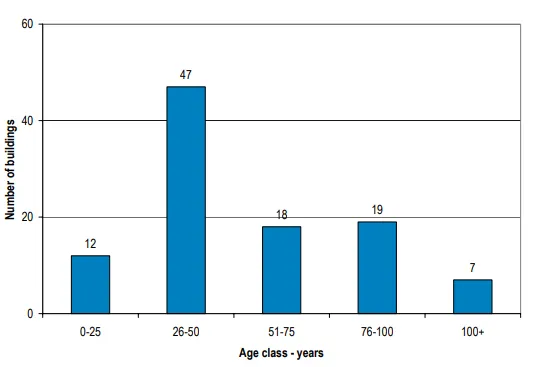
house to last 10, 100, or 1000 years?

Interesting construction or architecture question, how long houses last?

The only way any structure can last long time reasonably is to be maintained, evolved.

My take is that most of houses (and other entities) do not evolve quickly enough.

The expectations and technology solutions are changing, and speed of changes accelerating.

So to design something to last is to design for adaptability and ability to adjust effectively.

There are certainly some good lessons in this exploration / articles...
Assuming the premise is to preserve utility of buildings, not the structure alone.

Why American Houses Are Already Falling Apart - YouTube
This video examines why modern American housing has shifted from durable, craft-built homes to mass-produced, disposable commodities.Key Takeaways:

  • Material Degradation: Mega-builders prioritize speed and profit, using inexpensive materials like OSB (oriented strand board) and vinyl siding, which are prone to rot and moisture damage compared to traditional old-growth lumber and solid masonry.
  • Design Flaws: Modern "McMansion" architecture often features overly complex rooflines and a lack of proper eaves, which inherently create leakage points and structural vulnerabilities.
  • The Builder/Buyer Dynamic: Industrialized construction methods favor high-volume, quick sales. Warranty structures often shield these mega-builders from accountability, leaving homeowners to face massive, unexpected maintenance costs once structural issues arise.
  • Systemic Issues: The current housing crisis is driven by an industry incentive structure that rewards aesthetic "curb appeal" over long-term structural integrity, leaving many suburban homeowners with depreciating, high-maintenance assets.


How Long Will a Home Last? - by Brian Potter

Plus: octagon houses, chart rooms, Soviet apartment blocks and truss-joist hybrids+


How to design a house to last 1000 years (Part I)

How to design a house to last 1000 years (part II)

How to design a house to last for 1000 years (part III)


Construction Physics Author Brian Potter - Why America Struggles to Build - YouTube

Brian Potter is a structural engineer and author of Construction Physics, a weekly Substack about the economics, technology, and productivity of building and infrastructure

Hope for Architecture The Story — Clay Chapman Design


The Octagon House: A Home for All: Orson Squire Fowler, Madeleine B. Stern: 9780486228877: Amazon.com: Books

Reprints the mid-nineteenth-century work that extolled the merits of and provided advice on constructing an octagonally-shaped house


What Materials Are Used in Boxabl Homes


The Ultimate Guide to MgO Structural Insulated Panels: Building Smarter with Innovation


LONG NOW — fostering long-term thinking


CRDTs, Automerge: Local-First Software; book: Designing Data-Intensive Applications

In the context of computer science and distributed systems, CRDTs (Conflict-free Replicated Data Types) are specialized data structures that allow multiple users or systems to update the same data independently and concurrently without a central coordinator. They are designed to automatically merge divergent copies back into a single consistent state, making them a foundation for local-first and real-time collaborative software

1. Conflict-free Replicated Data Types (Computing)
CRDTs ensure Strong Eventual Consistency (SEC). This means that while different users might see slightly different versions of data at the same moment, once all updates have been received, every copy is guaranteed to be identical without any manual conflict resolution. [1, 2, 3, 4]
Key Characteristics
  • Decentralized: No central server is required to decide the "correct" version; every node is a peer.
  • Offline Support: Users can make changes while disconnected; these are merged seamlessly upon reconnecting.
  • Mathematical Properties: To work, their merge operations must be commutative (order doesn't matter), associative (grouping doesn't matter), and idempotent (duplicate updates don't change the result). [1, 2, 3, 4, 5, 6]

podcast

SE Radio 716: Martin Kleppmann Local-First Software – Software Engineering Radio

References
Amazon.com: Designing Data-Intensive Applications, 2nd Edition: The Big Ideas Behind Reliable, Scalable, and Maintainable Systems (Audible Audio Edition): Martin Kleppmann, Chris Riccomini, Graham Mack, Ascent Audio: Books