Vesta Kit IMP Houses by Ceres Greenhouse Solutions

Excellent design!

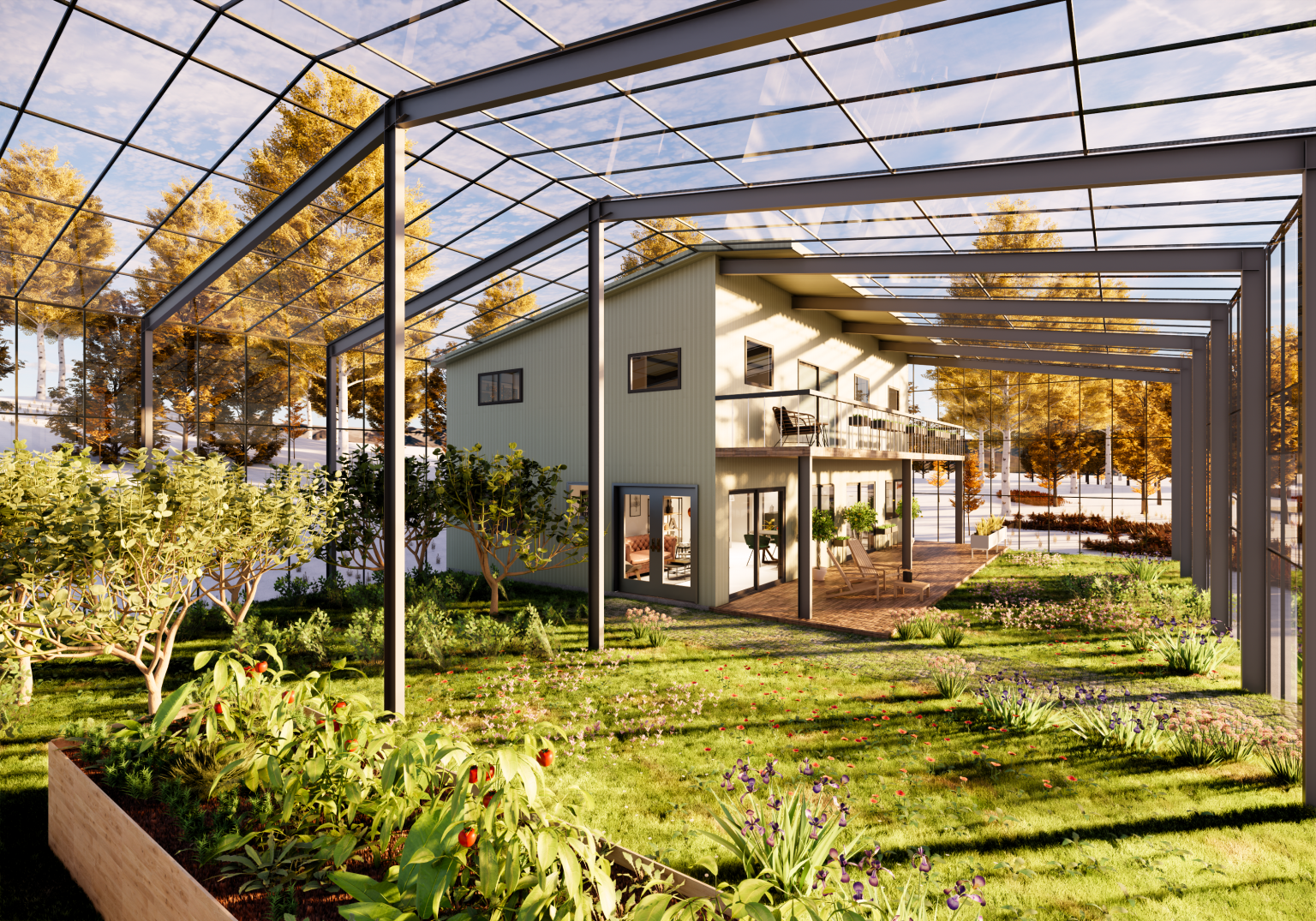
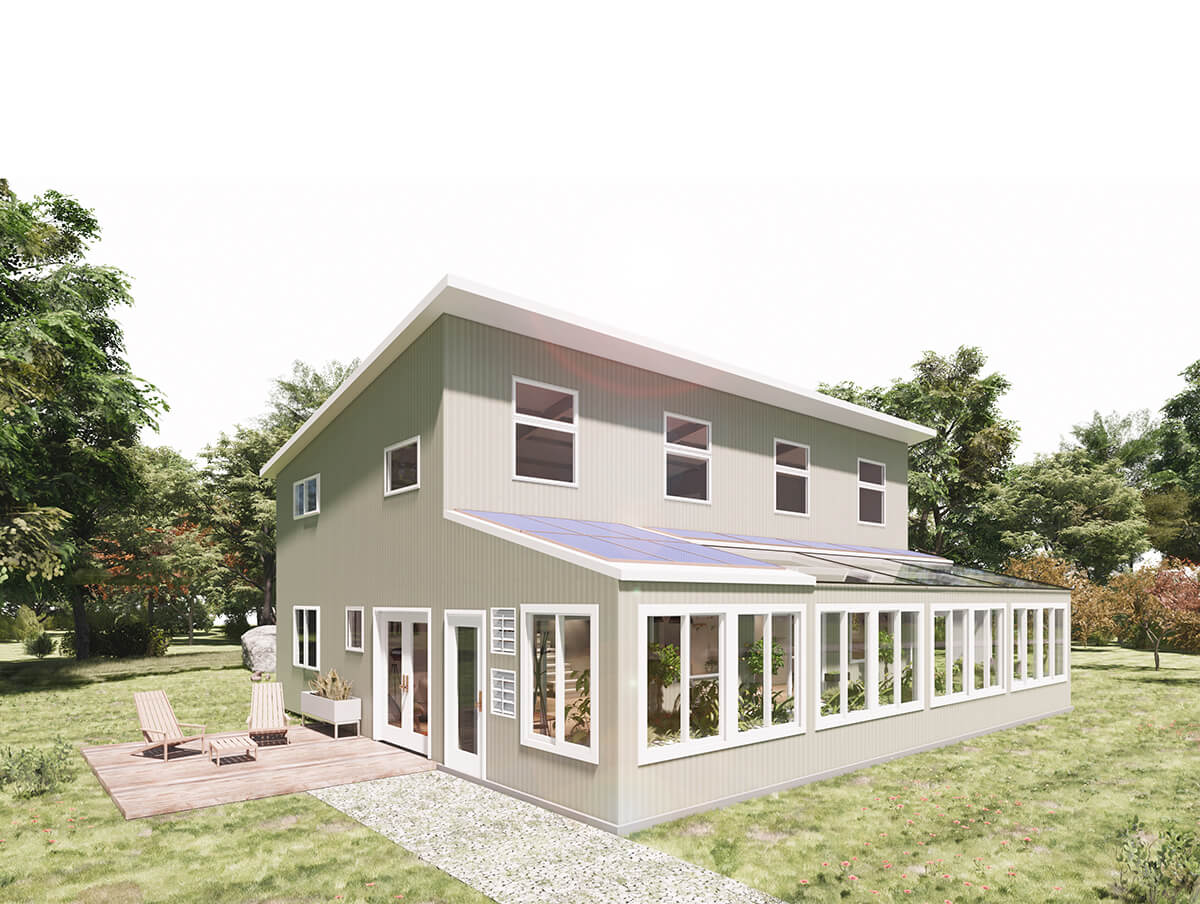
Highly efficient house, quick to build, passive-solar + attached greenhuse.

Homestead Greenhouse - Modern Greenhouse Design | Vesta Kit

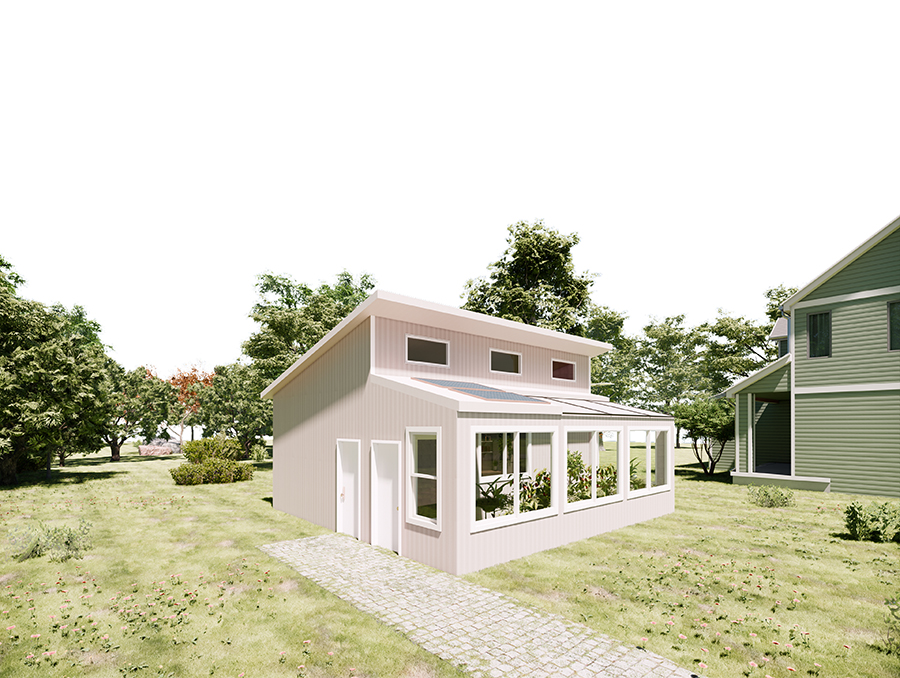
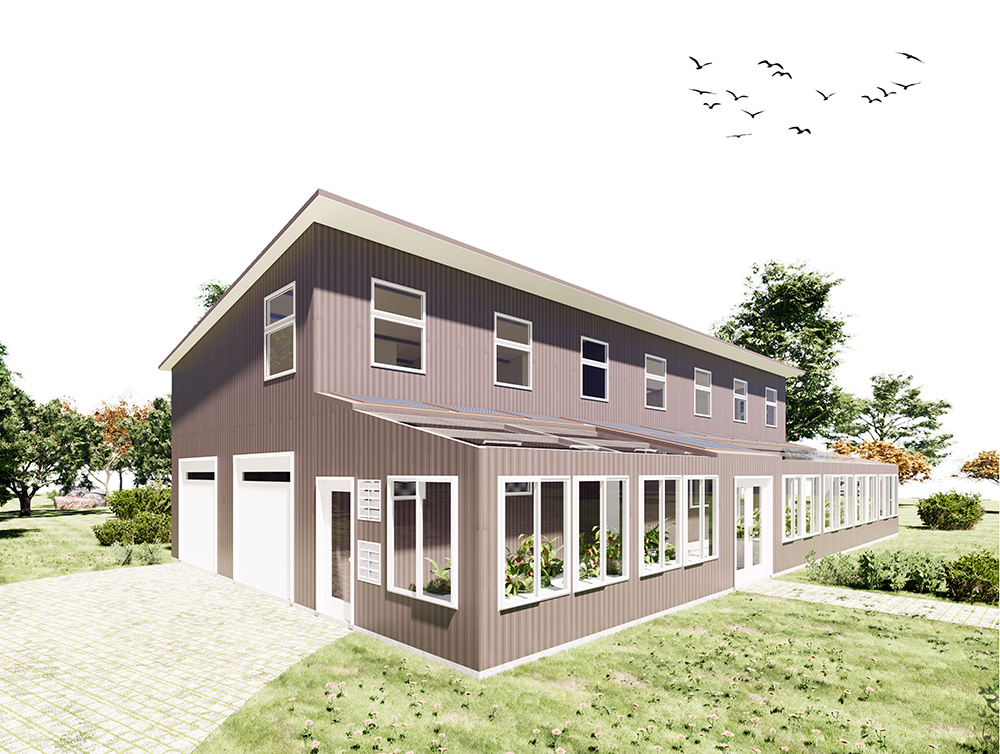
The Ceres kit house is leading the way in energy-efficient home design. The goal of the Vesta™ design is to provide you with a self heating, food producing home that is affordable to purchase, fast to construct, low maintenance and designed with beauty in mind.
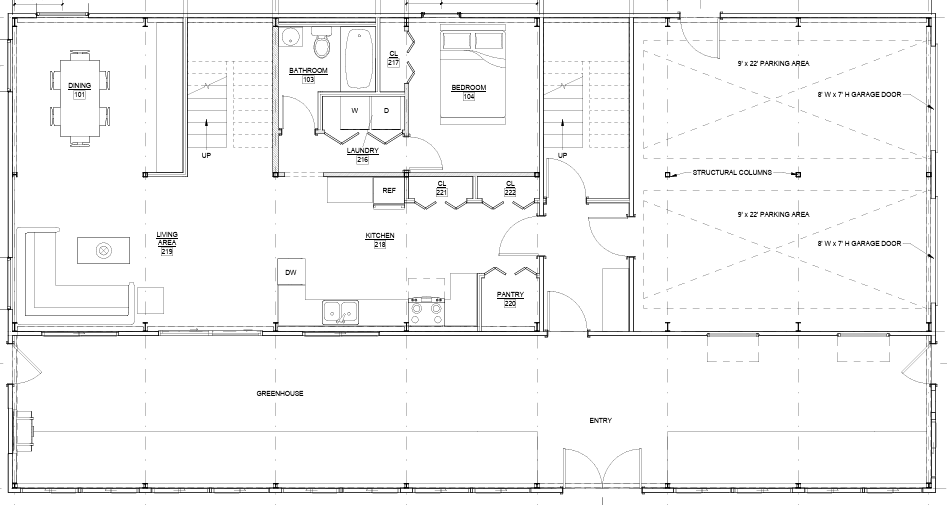
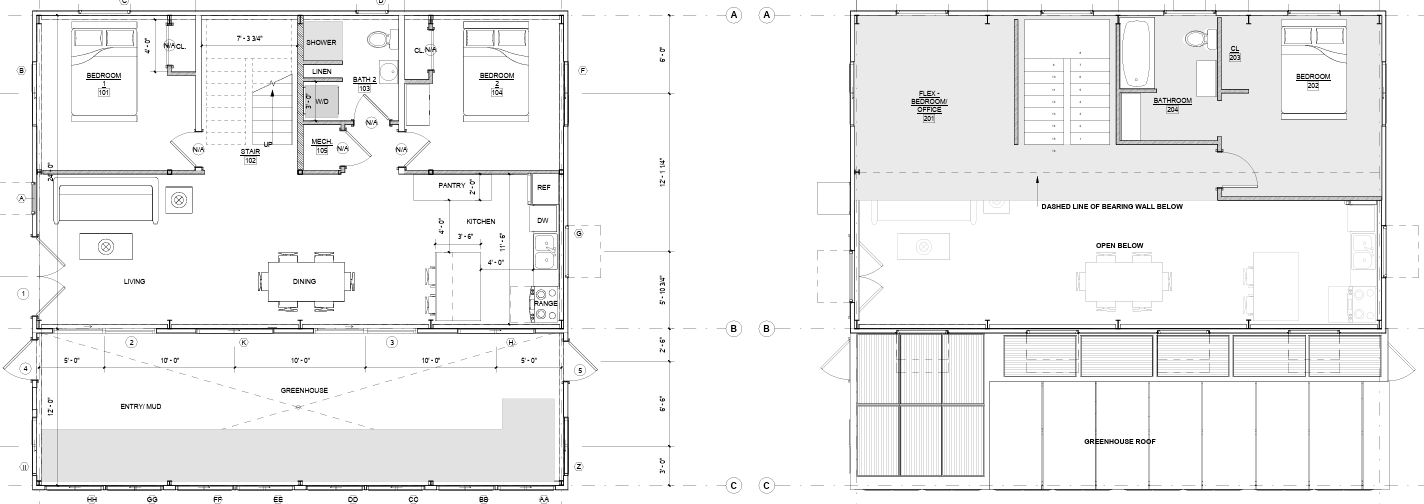
  • 24 ft x 40 ft house layout (includes 1 pre-designed floor plan)
  • 12 ft x 40 ft attached greenhouse
  • Galvanized steel with vertical columns and roof rafters spaced every 10 feet
  • Exterior doors, vinyl windows
  • Stamped structural drawings, construction drawings
  • Pre-engineered for 65psf snow & 110 mph wind load


Vesta™+ Model:

  • 24 ft x 40 ft house layout (includes 1 pre-designed floor plan)
  • 14 ft x 40 ft second story loft with framing
  • 12 ft x 40 ft attached greenhouse


Vesta™ ADU Model:

  • 16 ft x 24 ft living area layout (includes 1 pre-designed floor plan)
  • 8 ft x 24 ft attached greenhouse


 Vesta™ Homestead Model:

  • 24 ft x 40 ft house layout (includes 1 pre-designed floor plan)
  • 20 ft x 20 ft garage
  • 24 ft x 30 ft above garage apartment


Vesta™+ Naturehouse:

  • 24 ft x 40 ft house layout 
  • 14 ft x 30 ft second story loft with framing
  • 14 ft x 10 ft full second story
  • 2,880 sq ft attached glasshouse
  • Pre-engineered for 65psf snow & 110 mph wind load


1898 S. Flatiron Ct, Suite 125
Boulder, CO 8030

AI enabled future with Salim Ismail


AI Reset: "Life As We Know It Will Be Gone In 5 Years" - Upcoming Utopia vs Dystopia | Salim Ismail - YouTube @ Tom Bilyeu - YouTube (Impact Theory podcast)


Prominent Quotes from the Discussion:

"Our emotions are Paleolithic, our institutions are medieval, and our technology is Godlike."
— E.O. Wilson, referenced by Salim Ismail.

"Scarcity equals abundance minus trust."
— Jory Mulski, discussed by Salim Ismail.

Video Summary: In this episode of Impact Theory, Tom Bilyeu and technology strategist Salim Ismail explore the profound and disruptive impact of AI on society over the next few years.

Key Themes:The Human Problem: The core challenge of modern existence is the gap between our primitive emotional biology, outdated institutional structures, and rapidly advancing, godlike technology.

The Shift to Abundance: Ismail argues that we are entering a unique historical inflection point where AI, combined with energy abundance and life extension, will fundamentally alter human civilization. He emphasizes that once energy costs drop to near-zero, the cost of all other goods will follow suit.

Organizational Evolution: Traditional command-and-control hierarchies are becoming obsolete. Ismail promotes the Exponential Organization (ExO) model, which focuses on agility, decentralization, and the rapid adoption of AI to thrive in a volatile world.

The Role of Trust and Religion: A major discussion point is how society will maintain cohesion. Ismail views religion as a historic tool for social management and binding truth. As we move forward, he suggests we must find a new "binding coagulant" to hold society together in the absence of traditional models, noting that we are "meaning-making machines."

Entrepreneurial Opportunity: Despite the fears of dystopia, Ismail asserts this is the best time in history to be an entrepreneur. By identifying a major global problem and applying AI with an exponential mindset, individuals can create massive value.


OpenAI without "cloud", with Dell

OpenAI and Dell Technologies partner to bring Codex to hybrid and on-premises enterprise environments | OpenAI

OpenAI and Dell Technologies are collaborating to help more enterprises deploy Codex in the environments where their most important data, systems, and workflows already live.

Codex is becoming one of OpenAI’s fastest-growing enterprise products. More than 4 million developers now use Codex every week, and companies are already using it across the software development lifecycle, from code review and test coverage to incident response and reasoning across large repositories.